
· by Michael Blair, Nashville's Landscapers
In our experience, landscape spending falls into two piles: work a buyer pays for and work a buyer discounts. Cost and looks matter less to which pile it lands in than whether the next owner sees an asset or a chore they have inherited.
What landscaping do buyers pay for?
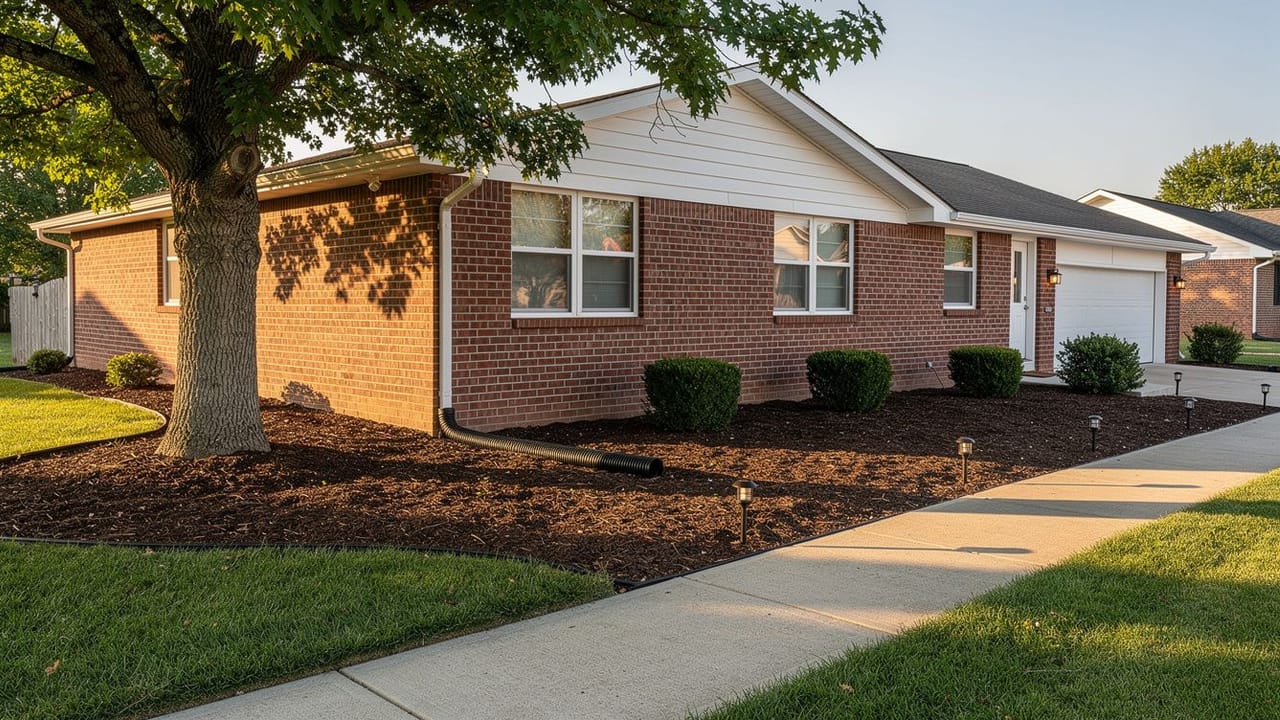
Mature shade trees are the clearest positive we see. The EPA’s page on the benefits of trees and vegetation says trees that directly shade buildings decrease demand for air conditioning, and it counts higher property values among their other benefits. What we would add from the job side is that a tree with that kind of canopy took many years to grow, and no budget buys that back in a season.
After that comes a clearly defined front bed line, healthy turf, a functional patio sized to hold actual furniture, and lighting that holds up in a Nashville yard along the walk and the front of the house. All of these show up in a listing photograph, and in our experience that photograph is where a buyer’s first opinion of the yard is formed.
What buyers discount
What we see buyers mark down is anything that reads as maintenance. Water features, extensive annual beds, elaborate topiary and large vegetable gardens all signal weekly obligation to someone who has not yet moved in. We build water features, and we build them for the people who will sit beside them rather than as a resale play.
Highly personal hardscape is the other one: an outdoor kitchen built around a specific grill, or a pergola sized to a particular furniture set. It cost a great deal, and we would not expect a buyer to pay anything close to that cost back.
The Middle Tennessee specifics
Drainage is the local one, and this city gets enough rain to test it: the National Weather Service’s Nashville climate page gives normal annual precipitation of 50.51 inches. A lot that visibly sheds water away from the house, with downspouts run out and no standing water, is one less thing for a buyer to wonder about. Our post on where the water goes in a Nashville yard walks through how we trace it. If you are not sure where your water is going, Metro’s Stormwater Division makes site visits to advise owners on drainage problems on private property.
Shade placement matters here because the hot season is long. The same NWS page puts the normal July high at 90.9°F, with the average first 90-degree day on May 27 and the average last on September 15. A west-facing wall with no shade takes the afternoon sun through that whole stretch, and buyers who have lived through a Nashville summer tend to notice which rooms run hot.
- Mature shade trees, especially off the west side
- Clean defined bed lines and healthy turf
- Visible, functioning drainage away from the house
- A patio sized for real furniture
- Simple, low-voltage path and facade lighting
What should come first on a limited landscaping budget?
We usually fix drainage first. Water standing against the house gets more expensive the longer it is left, and it is the last thing we would want a buyer to discover on their own. Regrading and sod are covered on our grading and drainage page.
Then structure, meaning trees, bed lines and hardscape edges, because it is what a photograph shows and the hardest to add later. Plant material and detail come last, since they fill in over a season or two and are usually the least expensive part to refresh before a sale.
Keep in mind what an appraiser is actually measuring. Fannie Mae’s Selling Guide on comparable sales has appraisers match the house against sales with similar site, room count, finished area, style and condition, and calls sales from within the neighborhood the best indicator of value. The yard is where a house can look better kept than its neighbors on the day it is listed, and if that day is coming, ask us to walk the property with you.
Sources
- US EPA, Benefits of Trees and Vegetation — Trees that directly shade buildings decrease demand for air conditioning; higher property values listed among the co-benefits of trees
- NOAA National Weather Service Nashville, Nashville Climate — Normal annual precipitation 50.51 inches; normal July high 90.9°F; mean first 90°F day May 27, mean last September 15
- Metro Nashville Water Services, Protect Your Property by Minimizing Flooding — The Stormwater Division makes site visits to advise property owners on flooding and drainage issues on private property
- Fannie Mae Selling Guide B4-1.3-08, Comparable Sales — Comparables matched on site, room count, finished area, style and condition; neighborhood sales the best indicator of value
FAQ
What Landscaping Adds to a Nashville Home — questions
Does landscaping actually increase appraised value?
Indirectly, more than directly, in our view. Fannie Mae’s Selling Guide has appraisers compare a house with recent sales of similar homes, matched on characteristics such as site, room count, finished area, style and condition, and it treats sales from the same neighborhood as the best indicator of value. Landscaping is part of how a house shows against those neighbors, so where we see it pay off is in how buyers respond to the listing rather than in the appraisal method itself.
Is a patio or a deck the better investment here?
For most of the yards we work on, we lean toward a patio. Stone or pavers on a compacted base have no boards to rot and no fasteners to work loose, and a patio sits well on a level part of the lot. Where the ground drops away from the back door, a deck is often the practical answer, because a patio there would need walls and fill to bring it up to the house.
How much should I spend on landscaping before selling?
There is no percentage we would hold you to; it depends on the house and on what the yard needs. We would put the money on the front of the house first and on anything that looks like a problem, such as water standing near the foundation. In our experience, cleaning up bed lines, fresh mulch, fixing drainage and pruning back overgrowth do more for a listing than a new installation, because they make the place look maintained rather than recently dressed up.
What is the best landscaping for selling a house?
Work that makes the yard look maintained rather than demanding: defined bed lines, healthy turf, pruned shrubs, fresh mulch and drainage that clearly sheds water away from the house. Mature trees, especially shading the west side, help but can’t be added quickly. New water features or elaborate beds may read to a buyer as weekly chores.