
· by Michael Blair, Nashville's Landscapers
Much of Middle Tennessee is clay over limestone. The USDA’s official description of the Talbott soil series, whose type location is in Rutherford County, describes a silt loam surface over a clay subsoil formed from weathered limestone, with moderately slow permeability and bedrock 20 to 40 inches down. The Mimosa series, found across the Central Basin, is rated slowly permeable. The USDA still classes both as well drained, with medium to rapid runoff off their slopes; the slow part is water soaking down into the clay, and a dug planting hole is exactly where that shows. Clemson Extension’s guide to planting trees names poorly drained soil as a leading cause of plant problems in the landscape. Choosing what goes into it is most of the thinking on any planting job we take on.
What clay actually does to roots
Roots breathe. The University of Florida’s guide to choosing trees for urban and suburban sites says compacted, poorly drained soils hold little oxygen, a gas tree roots need to survive and grow, and that only species tolerant of wet sites survive in them. A hole cut into dense clay makes a small version of that problem. After a hard rain it fills, and Clemson’s guide to planting shrubs describes the water in poorly drained soil collecting beneath the plant instead of draining away from it.
The same Clemson guide says many plants die from too little or too much water in their first few months, and that the ones in poorly drained soil tend to get too much. On clay, a limp plant is not always a thirsty one. Before we water anything that looks tired, we push a trowel into the soil beside the root ball, and if it comes up wet we leave the hose alone and look at where the water is going.
Which trees and shrubs handle Nashville clay?
For trees, we start with the ones that take clay and wet feet together, such as blackgum and bald cypress. NC State Extension’s plant database, written for North Carolina gardens, lists clay among the soils for blackgum and says it tolerates poorly drained soils and standing water. Its bald cypress entry says the tree has tolerated flooding for extended periods, and downy serviceberry is listed for clay that is moist and well drained but occasionally wet. Eastern redbud also takes clay, but its NC State profile says it does not tolerate wet soils, so we put redbuds on a slope or a rise where water runs off.
For shrubs, inkberry is listed for clay or sandy acidic soil and tolerates ground that is occasionally wet, and arrowwood viburnum handles a wide range of soils, including occasional flooding. Virginia sweetspire, usually sold simply as itea, grows wild in swamps and along stream banks and is rated resistant to wet soil, which makes it our choice for the corner of a bed where a downspout empties. When the wet spot is the whole yard, planting alone will not fix it, and our post on where the water goes in a Nashville yard starts there.
Among perennials and grasses, NC State lists clay for coneflower, black-eyed susan, amsonia, baptisia, switchgrass, little bluestem and muhly grass. They do not all want the same moisture, though. Switchgrass is rated for occasional flooding, while muhly grass is unfussy about soil only as long as it is well drained, so in one bed the switchgrass goes at the low edge and the muhly at the high one.
- Trees for clay that stays wet: blackgum, bald cypress, serviceberry
- Trees for clay that drains: eastern redbud
- Shrubs: inkberry, arrowwood viburnum, Virginia sweetspire (itea)
- Perennials: coneflower, black-eyed susan, baptisia, amsonia
- Grasses: switchgrass low, little bluestem and muhly grass high
Which popular plants struggle in clay soil?
The Mediterranean herbs come first. NC State says English lavender needs perfectly drained soil, preferably on the dry side, and its rosemary page says the shrub tolerates most soil types except clay. Japanese maples want evenly moist, well-drained soil, and oakleaf hydrangea, a Southeastern native, grows best in organically rich, well-drained soil. Every one of them is a drainage problem before it is anything else.
With blueberries and rhododendrons the usual worry is that limestone leaves the soil too sweet for them. The soil surveys do not bear that out. The USDA describes Talbott soils as strongly acid through most of the profile and Mimosa as medium to very strongly acid, turning toward alkaline only near the bedrock. The NC State highbush blueberry page puts the ideal pH at 5.0, groups blueberries with azaleas and rhododendrons as acid-loving plants, and says to take a soil test before planting. Fill dirt and a lawn that has been limed for years are not the soil the USDA described, so we test instead of guessing.
None of these is impossible here. They need a raised bed or a spot that genuinely drains, and Clemson’s tree guide says a site known to be poorly drained should get raised beds, often 8 to 12 inches above the existing grade using the native soil. Set flat into native clay in a level yard, they spend every wet spell sitting in water.
Planting technique matters more than amendment
Plant tags often say to mix compost into the hole. Clemson’s shrub guide says research points the other way: backfill with only the native soil, because an amended hole differs so much from the clay around it that roots stay inside it. The UF guide reaches the same place for trees, saying that modifying the small area of backfill next to the root ball does little to benefit them, and Clemson’s tree guide warns that fine material such as peat moss in a hole can act like a sponge in a bathtub after rain. The hole itself should be two to five times wider than the root ball and no deeper than it, since Clemson says holes dug too narrow and too deep often lead to weak growth and the death of the plant. In heavy clay the sides of the hole can glaze over like the inside of a terra cotta pot, so we notch them with a mattock before the plant goes in.
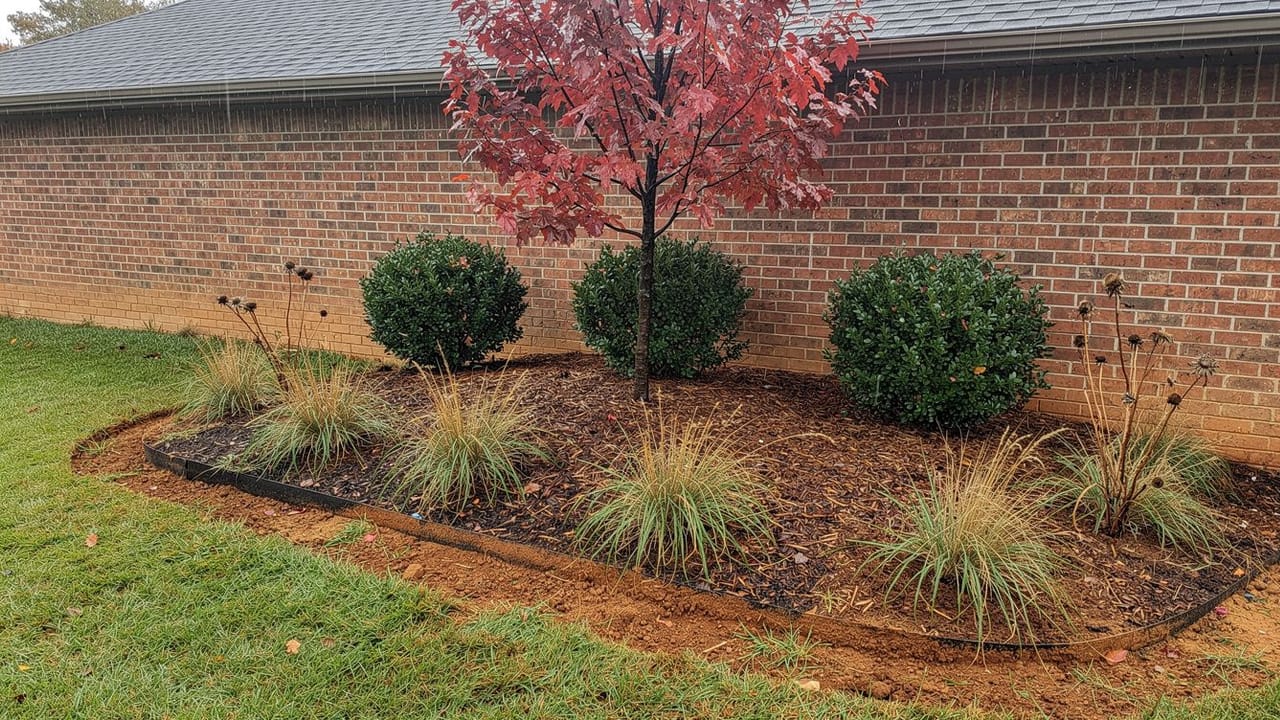
In poorly drained or compacted soil, Clemson sets the top of the root ball about 2 to 4 inches higher than the surrounding soil, with the ground built up around its sides and nothing piled on top, so the roots get oxygen and water drains away. Over that goes 2 to 3 inches of organic mulch, kept 2 to 3 inches from the stems. On a site that stays wet, we raise the whole bed before we think about amending it, the same order Clemson gives, with drain tile held back for the extreme cases. Fall is when we prefer to do all of this, for reasons laid out in our post on the right month to plant, and if you have a bed that keeps losing plants, ask us to come look at the soil before you buy the next round.
Sources
- USDA-NRCS Official Soil Series Description, Talbott series — Clayey residuum weathered from limestone; silt loam surface over clay subsoil; moderately slow permeability; bedrock 20 to 40 inches; type location Rutherford County, TN; strongly acid through most horizons
- USDA-NRCS Official Soil Series Description, Mimosa series — Central Basin of Tennessee; clayey residuum from phosphatic limestone; slow permeability; medium to very strongly acid except near bedrock
- Clemson Cooperative Extension, HGIC 1001 Planting Trees Correctly — Poorly drained soils a leading cause of plant problems; raised beds 8 to 12 inches on poorly drained sites; drain tile in extreme cases; peat moss in the hole acts like a sponge in a bathtub
- Clemson Cooperative Extension, HGIC 1052 Planting Shrubs Correctly — Backfill with native soil only unless amending the whole bed; amendment 10 to 20 percent by volume; glazed sides in clay, notch with a mattock; hole two to five times wider and no deeper than the root ball; too narrow and deep leads to death; root ball 2 to 4 inches high in poorly drained soil; water collects beneath the plant; mulch 2 to 3 inches, 2 to 3 inches from stems; too much water in poorly drained soil
- University of Florida IFAS Extension, EP310 Choosing Suitable Trees for Urban and Suburban Sites — Compacted, poorly drained soils contain little oxygen; only wet-site-tolerant species survive; modifying the backfill next to the root ball does little; measure the water table in the coolest or wettest season, as it can drop several feet in the growing season
- NC State Extension Plant Toolbox, Nyssa sylvatica (blackgum) — Clay listed; tolerates poorly drained soils and standing water
- NC State Extension Plant Toolbox, Taxodium distichum (bald cypress) — Clay listed; tolerates flooded conditions for extended periods
- NC State Extension Plant Toolbox, Amelanchier arborea (downy serviceberry) — Clay soil that is moist and well drained but occasionally wet or dry
- NC State Extension Plant Toolbox, Cercis canadensis (eastern redbud) — Tolerates clay; does not tolerate wet soils
- NC State Extension Plant Toolbox, Ilex glabra (inkberry) — Clay or sandy acidic soils; tolerates occasionally wet soil
- NC State Extension Plant Toolbox, Viburnum dentatum (arrowwood) — Clay listed; tolerates a wide variety of soils including occasional drought or flooding
- NC State Extension Plant Toolbox, Itea virginica (Virginia sweetspire) — Native to swamps and stream banks; resistant to wet soil
- NC State Extension Plant Toolbox, Panicum virgatum (switchgrass) — Clay listed; occasional flooding and occasionally wet
- NC State Extension Plant Toolbox, Muhlenbergia capillaris (muhly grass) — Clay listed; unfussy about soil as long as it is well drained
- NC State Extension Plant Toolbox, Lavandula angustifolia (English lavender) — Requires perfectly drained soil, preferably on the dry side
- NC State Extension Plant Toolbox, Salvia rosmarinus (rosemary) — Tolerates most soil types except clay
- NC State Extension Plant Toolbox, Acer palmatum (Japanese maple) — Evenly moist, well-drained soil
- NC State Extension Plant Toolbox, Hydrangea quercifolia (oakleaf hydrangea) — Southeastern native; grows best in organically rich, well-drained soil; clay not listed
- NC State Extension Plant Toolbox, Vaccinium corymbosum (highbush blueberry) — Ideal pH 5.0; group with azaleas and rhododendrons; soil test before planting
FAQ
Plants That Actually Thrive in Nashville Clay — questions
Should I amend Nashville clay before planting?
Amend the whole bed if you are amending at all, not the individual planting hole. Clemson Extension says an amended hole can differ so much from the surrounding soil that roots stay inside it, and the University of Florida says changing only the backfill next to the root ball does little to benefit trees. Where Clemson does add organic matter, it is worked through the entire bed at no more than 10 to 20 percent of the soil volume, which for a bed 8 inches deep means 1 to 2 inches of compost tilled in. Wide, shallow holes and plants chosen for clay are where we put the effort.
Why do my plants die over winter rather than in summer?
There is no single answer, and we would rather check than guess. Clemson Extension says many plants die from too little or too much water in the first few months after planting, and that plants in poorly drained soil tend to get too much. A shrub planted in fall spends those months in winter, so when one fails to leaf out in spring we dig beside the root ball and see whether the soil is staying wet before blaming the cold. The University of Florida advises measuring the depth to the water table in a site’s coolest or wettest season, since it can drop several feet during the growing season, so ground that looks fine in summer can be wetter in winter.
Is raised bed planting worth it here?
On a flat or low-lying lot that holds water, yes. Clemson Extension says a site known to be poorly drained should get raised beds, often 8 to 12 inches above grade using the native soil, and that in poorly drained or compacted soil a shrub should sit 2 to 4 inches higher than the ground around it so its roots get oxygen and water drains away rather than collecting beneath it. Where the whole yard stays wet, Clemson points to drain tile for the extreme cases, and that becomes grading and drainage work rather than planting.
How do you plant shrubs in clay soil?
Dig two to five times wider than the root ball and no deeper, notch any glazed sides, and backfill with the native soil alone. Where drainage is poor, Clemson sets the top of the ball 2 to 4 inches above grade with soil built up around it, then adds 2 to 3 inches of mulch kept off the stems.